
Pool pump: Review Espa SilenPlus
Status: Draft, published...
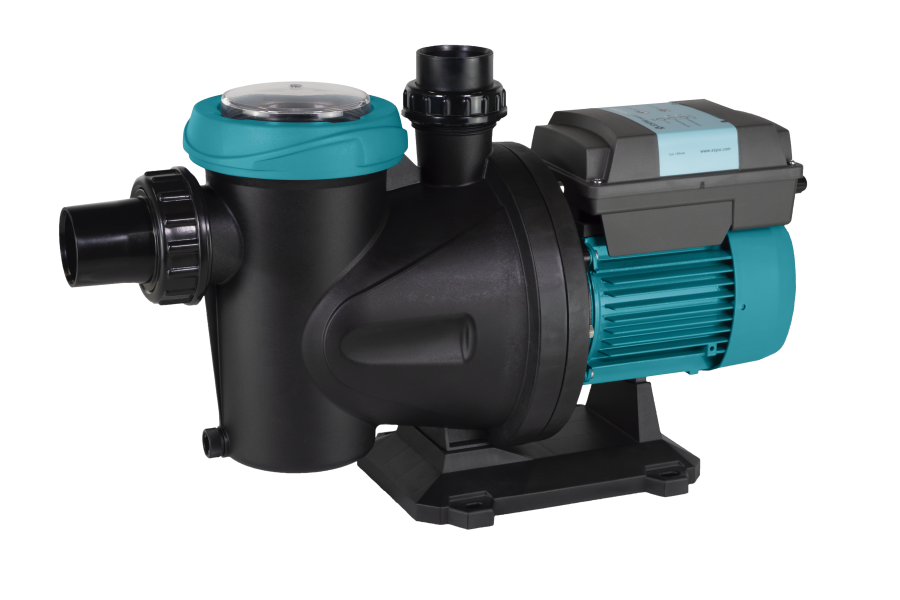
You can consider this to be a review of an Espa SilenPlus 2M pool pump (and 1M and 3M), using the Evopool app. The pump has two functions: circulating water in the pool through the jet nozzles and filtering water through the sand filter. Combined with a chlorine unit, the pump has an often forgotten third function: Dissolving chlorine gas in the water. Working with Espa SilenPlus 2M combined with the Evopool app can be considered as an adventure with so little information on the net. I hope this article helps you with your pump choice. The choice is vast but basically there are cheap pumps that are not controllable and more expensive controllable pumps ('variable frequency'). There is also a range of power ratings, expressed in HP (18th century Crazy Horse Power) but preferably in Watts.
Considerations
With current energy prices, it is a good idea to reflect on this topic. There is an occasionally heard rule of thumb:
A pool pump should pump around the volume of the pool every 24 hours.
Where the rule comes from I don't know and a few comments are in order:
- It is an approach that apparently emerged from good practice.
- A heavily burdened pool will need more pumping hours, think pollution but also sun and temperature. This is in contrast to a light burden with fewer pumping hours.
- A poor chemical balance of the pool will require many more pumping hours. This applies to a large proportion of private pools in particular and yes that needs first attention before continuing reading.
- With a good and controlled chemical balance, even fewer pumping hours are needed.
- Proper information on pool water quality and management is scarce. That's why I wrote this short explanation.
Then you can consider some principles:
- A pump with double the power will not pump double the volume. This is because the pipes and sand filter will form a significantly larger bottle neck.
- Conversely, pumping twice as long with half the power will filter significantly more water. The electricity cost of filtering will therefore be lower.
- This creates an argument for using a variable pump.
With or without variable speed drive
A pump with a variable speed drive can operate at low power for a long time, thus saving energy. Moreover, you can adjust the power to your liking. However, this comes with a considerably higher price tag.
A pump without a variable speed drive can only pump at full power. Energy can be saved by being flexible with pumping hours. Such a pump is cheaper to buy.
A comparison
To get an idea of the differences, two renowned pumps from Espa are compared: SILEN S2 150 versus SILENPLUS 2M
Tabel
| Model | SILEN S2 150 | SILENPLUS 2M |
| Image | 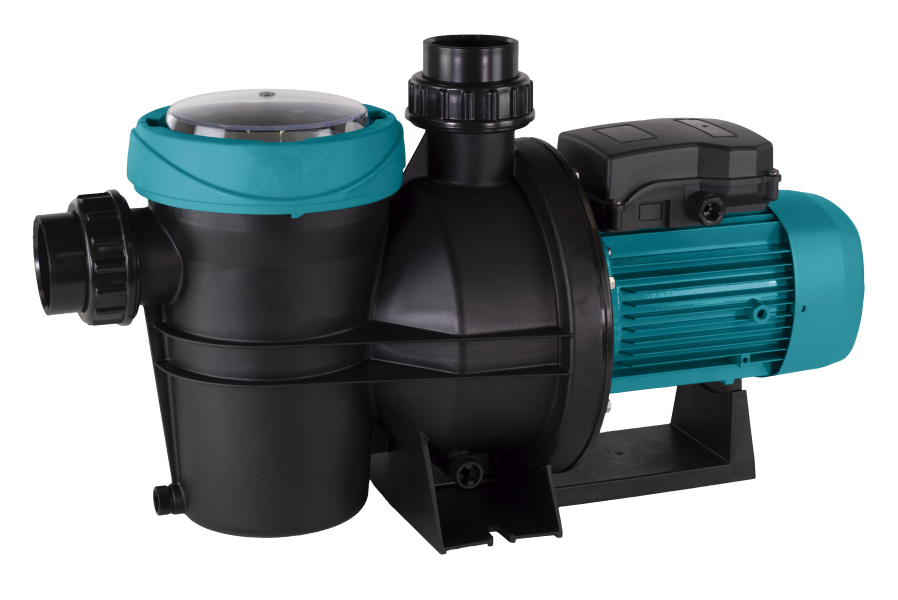 |
|
| Type | basic | freq. controlled |
| Operation | time switch | phone app |
| Motor power P2 (W) | 1100 | 1100 |
| Motor power P2 (HP) | 1.48 | 1.48 |
| Input power P1 (W) | 1900 | 1500 |
| Price (€) | 499 | 1093 |
Full speed efficiency
What is first noticeable is that at full power there is a difference of 1900 - 1500 = 400 W. At a price of 0.25 €/kWh and 4 pumping hours per day, that amounts to a saving of €146 per year. This recovers the €592 price difference in 4 years.
For completeness, the cost of electricity based on that data is €694 and €548 per year respectively.
The real deal
The principle is to pump longer and with less power, thus boosting efficiency. Unfortunately, it is difficult to make a calculation and, moreover, it obviously depends on the pool burden. Personally, 20 to 30% seems plausible to me.
If it is possible to subtract another 30% from the latter annual costs (€548), the result is €383, a euro a day so to speak. And with the convenience of an app, active management is easier than changing the timer every time.
Espa Evopool app
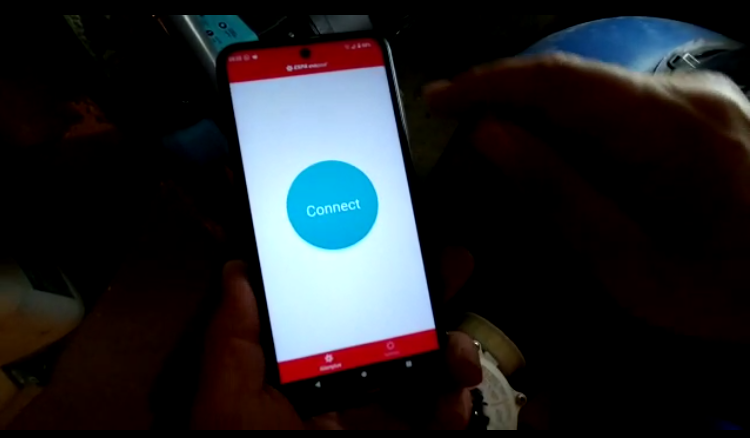
Just download it and start the app near a pump...
But first: Attention for chlorine production
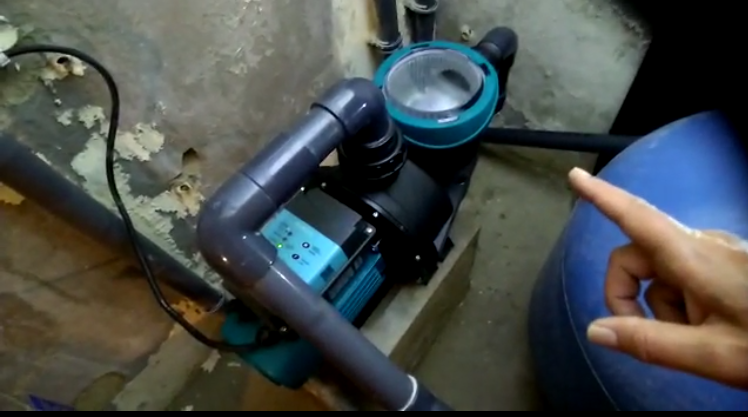
The Espa Evopool app will change things. In other words: One of the most important things about a variable pump is the control of chlorine production. If the pump is running slower, there is a good chance that the chlorine produced will not have a chance to dissolve in the water. So you will also have to pay attention to the setting of the chlorine unit. The video shows how that works. The chlorine production should be high enough that no gas is visible at the pool outlet, as well as in the chlorine unit sight glass and the pump sight glass.
About the Espa Evopool app and the controller...
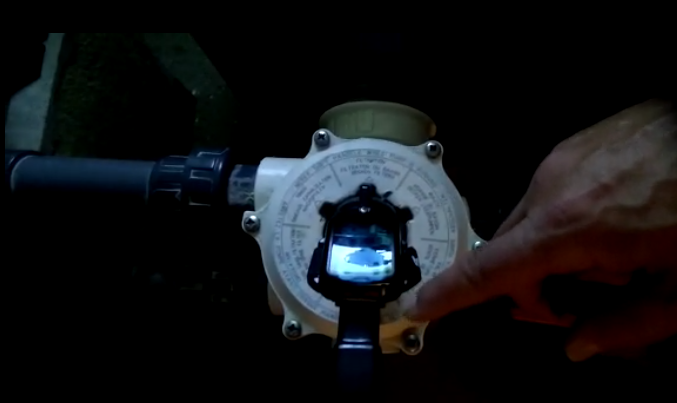
How to get the controller, attached on the valve, calibrated:
About the Espa Evopool app combined with a timer...
When you launch Espa's app Evopool you are asked a series of questions. How big is the pool? Is there a chlorine unit present? Based on these, pump settings are chosen automatically. That sounds very good and it really is.
However, if you operate the pump with a timer then this is not taken into account. The pump assumes there is power 24/7. This is something to consider when choosing your pump. But this problem can be solved, read on.
If you have solar panels then you only want to run the pump for ~10 hours - using a clock switch. You will then obviously have to pump at a higher power. If you don't do that then you will soon get algae growth - so experience shows.
In our case, the app's 24-hour suggestion is 3 minutes full power, then 60 minutes on setting 2 of 10. This is a cycling scheme, 3 min fast, 60 min slow, 3 min fast and so on.
The first question is, "What does setting 2 mean?" Is it 2/10 of frequency? Of the power? Otherwise? That's a question for Espa. For convenience, I assume power. In that case, position 10 is 1500 W and 2 is therefore 300 W.
So per day, without solar panels, 24 hours * 300 W = 7.2 kWh is suggested by the app. If we spread that 7.2 kWh out over about 10 sun hours then that means pumping with a power of 7200 W / 10 hours is ~750 W - corresponding to setting 5 in the app. So you will have to adjust that.
The next video shows you how to change the cycling scheme.
The last step is to adjust the chlorine unit as discussed earlier. This information has also been sent to Espa and I hope to get an answer and confirmation of this....
Pumping versus chemicals
A peculiar comparison comes to mind. With better chlorination, you need fewer pumping hours.
A price for a liter of ~14% sodium hypochlorite is about €0.65. 1 ppm converted, for a 50 m3 bath, is only 0.35 liters. The cost of €0.23 is equivalent to about 1 kWh. Of course, these prices depend greatly on the geographical location and whether you have access to solar panels.
The argument is that it may be interesting to consider the following:
- Fewer pumping hours and let the chlorine unit work harder.
- Fewer pumping hours and regularly adding additional sodium hypochlorite.
- Fewer pumping hours and keeping a very strict eye on the chemical composition of the pool water to achieve optimal chlorine performance.