
Commons Shapes Designation Standard
STATUS: DRAFT
This standard defines a universal way to describe shapes.
Internally (at NedCAD), a programme is used for profiles - yy.lsp. There is a valuable piece of standardisation attached to this, which is described below. Command YY is tinkered with from time to time - it is a lot of code. Hopefully it can be published in due course.
Intend
The intend is to offer a way to classify industry standard profiles, not limited to steel, based on shape only.
The reasons for using this standard can be:
- Shapes are described not depending on manufacturing characteristics such as "warm rolling".
- Shapes are described not depending on function characteristics such as "beam".
- Shapes are described not depending on material characteristics such as "steel".
- The names are better suited for use in automation applications.
- Naming is based on visible appearance like "Square" and "Rounded", seeking a compromise between habitual naming, being practical and being complete enough to achieve global coverage.
- By defining a shape, followed by parameters for geometry, a global unique designation is created.
Summary
This standard describes a way to specify basic shapes of sections, together with their dimensions.
A code is a concatenation of data blocks:
- Shape block: This is one character for the main shape
- Abbreviations: H Hexagonal, C Circular, S Square, R Rectangular or…
- Letters of letter shapes sections: I, U, L, T, O, Z (O is omega shape). Example: R for rectangular massive flat bars.
- Details block: Zero or more characters with constraints of the shape. They are only added if required. Order is alphabetical.
- E: Equal width and height and or equal legs. Examples: ZE for a Z profile with equal legs or TE for a T with equal width and height.
- H: Hollow sections. Examples: SH for for a square hollow with sharp edges and CH for a circular hollow, pipe.
- F: Flanges extra. Example: UF for a C like profile.
- R: Round edges. Examples: SR for a square bar with rounded edges or SHR for a square hollow with rounded edges, square tube.
- S: Flange has a slope: Example: IWS for an I profile with flanges with a slope.
- (n)W: Wall endings diverge. Diverging thickness, width of one or more wall endings (i.e. are not parallel, ending in radius), typical for warm rolled products. If similar flanges end not straight a value between brackets is leading: 1 for one radius, 2 for two radii. If non similar flanges end not straight the sum is added. Examples: IW for an I profile with radii between flanges and web but with sharp flange endings, L1W for a L profile with each leg ending containing one rounding, L2W is similar but with each leg ending containing one rounding on each side of the flange ending, T3W for a T profile with horizontal flanges with one radius and the vertical flange with two radii.
- X or Y: Section is cut over x- or y-axis. Example: IW cut over longitude becomes IWX.
- Units block: Omitted or one character, no character means metric in mm and "I" means imperial in inches.
- Geometry block: All dimensions needed to constrain a section
- The logical order is: First order rule: width, then height, then thickness in same order, radii and angles. Second order rule: first horizontal, then vertical. For radii: First internal, then external, then flange endings.
- Angles can be degrees or ratios like "7/50".
- Dimensions are nominal.
- See the table with drawings, where dimensions have an order number.
- The list separator is an asterisk "*"
The following table shows the implementation of what is above.
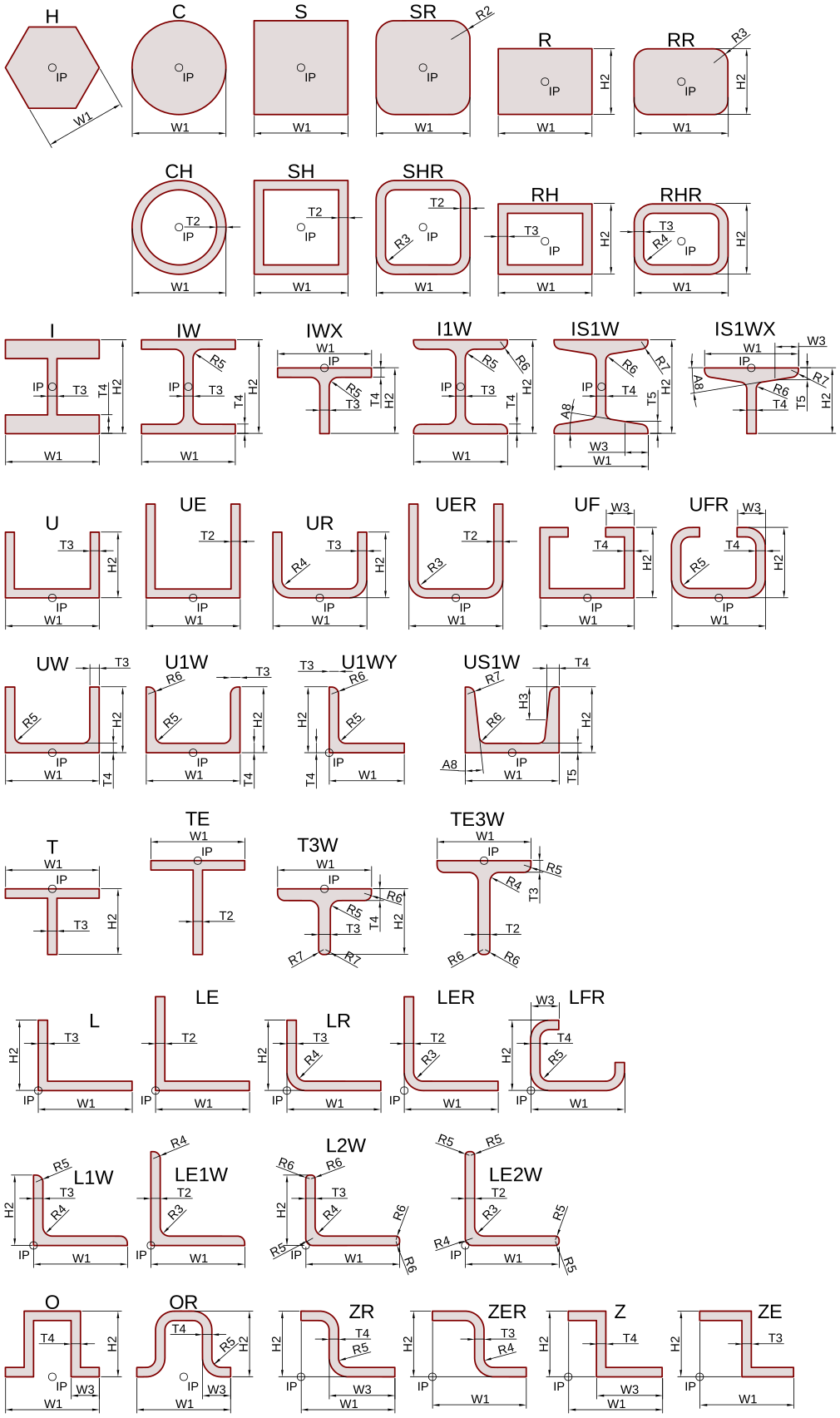
Naming
A shape is defined by a concatenated string, consisting of two parts:
- Shape defining parameters like R for Rectangular bar.
- Geometry defining parameters 30*5 for width and height in mm.
Following this example, the designation is:
R30*5
String of shape defining parameters
The name is one or a combination of characters.
- The first character is the main shape. Examples: "T-profile" and "Rectangular"
- Subsequent characters are only designated if not corresponding to the expected default shape and or add extra shape complexity. This works like a sieve. The longer the code, the more complexity.
First character, main shape
The first character determines the basic shape.
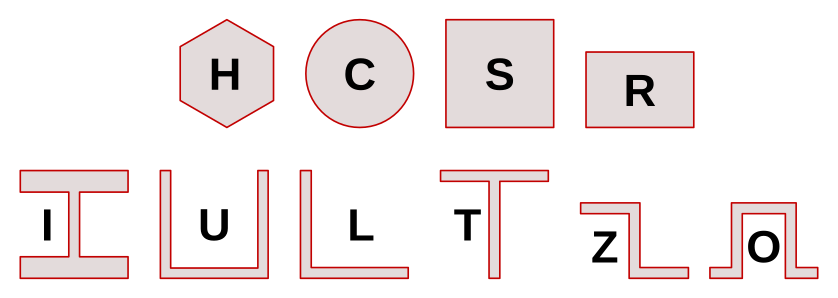
The first row contains abbreviations:
| H | Hexagonal |
| C | Circular |
| S | Square |
| R | Rectangular |
The second row is more obvious, the letter represents the shape. O stands for omega.
Following characters, additional shape characteristics
The sieve consist of characteristics that are additional to the main shape. So what is standard, what is expected is not specified. Deviations are marked with a character. From top to bottom:
| Char. | Standard, normally to be expected | Deviation | Examples | Remarks |
| E | Width does not equal height and or not equal legs | Equal width and height and or equal legs | LE, TE, ZE | For Squares and Rectangles an E is not applicable. For Z-profiles only equality of legs is meant. |
| F | No extra flanges | Extra flanges | UF | |
| H | Solid | Hollow | CH, RH | CH is a pipe. |
| R | Sharp edges | Round edges | LR, UR | Typical products with one or more bending radii. |
| S | Flanges without a slope | One or more flanges have a slope | ISW, USW | Also typical for some warm rolled products. |
| (n)W | Parallel wall endings | Diverging wall endings | IW, T3W | This is typical for warm rolled and extruded products where internal radii change the thickness and or when flanges end in a radius instead of ending straight. A leading number represent the number of radii per flange type |
| X or Y | Whole shape | Shape is cut over length | ISWX, UWY | X is horizontal cutting, Y is vertical, based on orientation in the table with examples and dimensions and as discussed under "orientation". |
| I | Metric dimensions in millimetres | Imperial dimensions in inches | RHRI, IWI | If the last character of the shape defining string is I, then the parameters that follow are in inches. |
String of geometry defining parameters
About orientation, shapes are positioned as illustrated. The series H, C, S and R as drawn. The letter series as written. So a H-beam is a variant of the family of I-shapes and is drawn as an I.
| Abbr. | Meaning |
| IP | Insertion Point (most logical snap point for CAD) |
| W | Width, a horizontal dimension. |
| H | Height, a vertical dimension. |
| T | Thickness of material. |
| R | Radius. |
| A | Angle in degrees |